Welcome to my first ever post! As a little celebration and to set some ground work I thought I’d write about my favourite manga. Though this is far from an all encompassing loving thesis.
Baby Steps by Hikaru Katsuki -
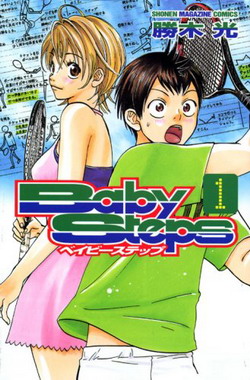
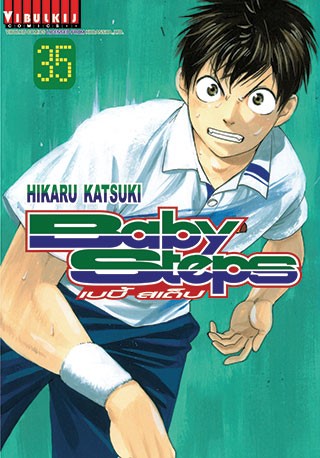
At first glance what I describe in this post may seem dry, clinical, or boring but please remember what I’m talking about are the mechanics that make Baby Steps the most entertaining manga ever. So. Baby Steps is a long running tennis sports narrative manga following the career of Maruo Eiichiro, starting off when he discovers the sport at age 15. Following the classic sports manga style of introducing Tennis, setting up opponent characters for Maruo, Tournaments, and a romance side plot. Important to note Baby Steps is a series that’s squarely about tennis as a sport. Sports stories often use their sport as a vehicle for setting and character development. You’ll hear people say things like “x-series isn’t a story about x-sport, but a story about a person who happens to play x-sport” Baby Steps is that former type as a story about tennis, which gives it unique strengths forgone by the other style. Now what Baby Steps does that puts it above other manga in the same genre is how it imbues the reader with an understanding of tennis down to its basic rules and in depth nuances. Quickly after beginning, the reader will understand the rules of tennis to the point they could turn on a tv and not be lost watching a real game. Yet, that is simply the first building block towards developing an understanding of what it tangibly means to be a tennis player of varying skill levels, varying styles, or even varying age ranges. For example, this even goes so far as to how the reader will understand the implications of a serve being hit at 150km/h vs 200km/h. Exactly how much harder is it to return the 200km/h ball? Exactly how much does it matter if an opponent is far taller than you? Exactly how hard is it to aim for a difficult shot? The main character Maruo’s playstyle is very analytical and defensive, I’m certain it was written that way to benefit this aspect of the story.
All of this is a method to get readers invested in each individual moment, and each character. When a reader knows what is impressive in real tennis then they will in turn be impressed when it happens in the manga. Charismatic characters can be introduced at any time then further developed with strengths and weaknesses in regards to tennis on top of their normal personality strengths and weaknesses that any good character from any media would have. These characters and matches all exist to challenge Maruo. The readers will be placed so deeply in his shoes, sharing all the same information as him. So when he faces an opponent slightly better than him we share his apprehension and drive to win and when he faces an opponent far outclassing him we share his desperation or his admiration. Of course upsets happen in real life and in sports manga those can be some of the most exhilarating moments. But in baby steps they are far more satisfying than normal precisely because we understand exactly how far the skill gap is and we understand exactly what Maruo had to go through to win even a single point. Upsets are interesting to watch, as are nailbiter close matches, impossible struggles, and satisfying stompouts.
This understanding of character’s skill is not static either. The series is all about watching Maruo improve over time. While gradual, Maruo’s skills and his physical stats are improving constantly. The story never goes stale as these changes have substantial and quantifiable effects on his tennis. Maruo’s improvement is a good thing for the narrative since it opens his mid-game options and allows for faster paced action, along with the general higher stakes of pro tennis. Baby Steps also does something incredibly rare that I love. It has rematches between characters we’ve already seen together, recontextualizing their previous matches and using already laid groundwork to create interesting scenarios by making a contrast with their improved skillsets. Alllllll of that basically makes the tennis matches in Baby Steps analytical action sequences.
To end off I’ll make it clear that Baby Steps really has so much going for it but I view this as the core of its biggest strength. The readers gained understanding of tennis permeates throughout the entire manga and not just the matches and practicing scenes. For example, this understanding also serves and is a consequence of the greater realistic style of the series. However, that’s a totally different topic I intend on writing about soon.
Thanks for reading the first ever post! I will write more on baby Baby Steps and I plan on compiling all the articles into a good Baby Steps mega playlist which will be the completed “Loving Thesis”
But I will write about a bunch of manga from every genre I love and dislike so please look forward to it.